
.jpg)
Written by:
Pkwy Moving & Storage Team
Published:
September 9, 2026
Wondering how long to pack a house before a move? See realistic packing timelines by home size so you can schedule movers without running out of time.
Most households need one to five full days to pack, depending on square footage, and that number climbs fast once you add kids, clutter, or a full-time job into the mix. The mistake we see most often isn't starting too late, it's underestimating how much slower packing goes than it looks on paper. Here's a realistic breakdown by home size, plus how to tell if your own household will run faster or slower than average.
A studio or one-bedroom apartment typically takes a single adult one full day, or about six to eight hours. A three-bedroom house usually takes three to four days for one or two people working steadily. A four-bedroom or larger home with a garage, attic, or basement often needs five to seven days spread across a week or two.
These estimates assume you're packing evenly, not cramming everything into the final weekend. They also assume a household with a normal amount of stuff. A minimalist apartment and a cluttered one of the same square footage can differ by a full day or more.
Three things eat up the most time: decision fatigue over what to keep, hunting for supplies mid-task, and rooms nobody planned for, like the garage or a hall closet. Households that skip these traps finish noticeably faster than the estimates above.
Kitchens and garages are consistently underestimated because they're full of odd-shaped, easily-forgotten items. A kitchen alone can take a full day by itself in a house that cooks a lot. Kids' rooms and home offices also run long because of small items, cables, and sentimental clutter that requires a decision instead of just a box.
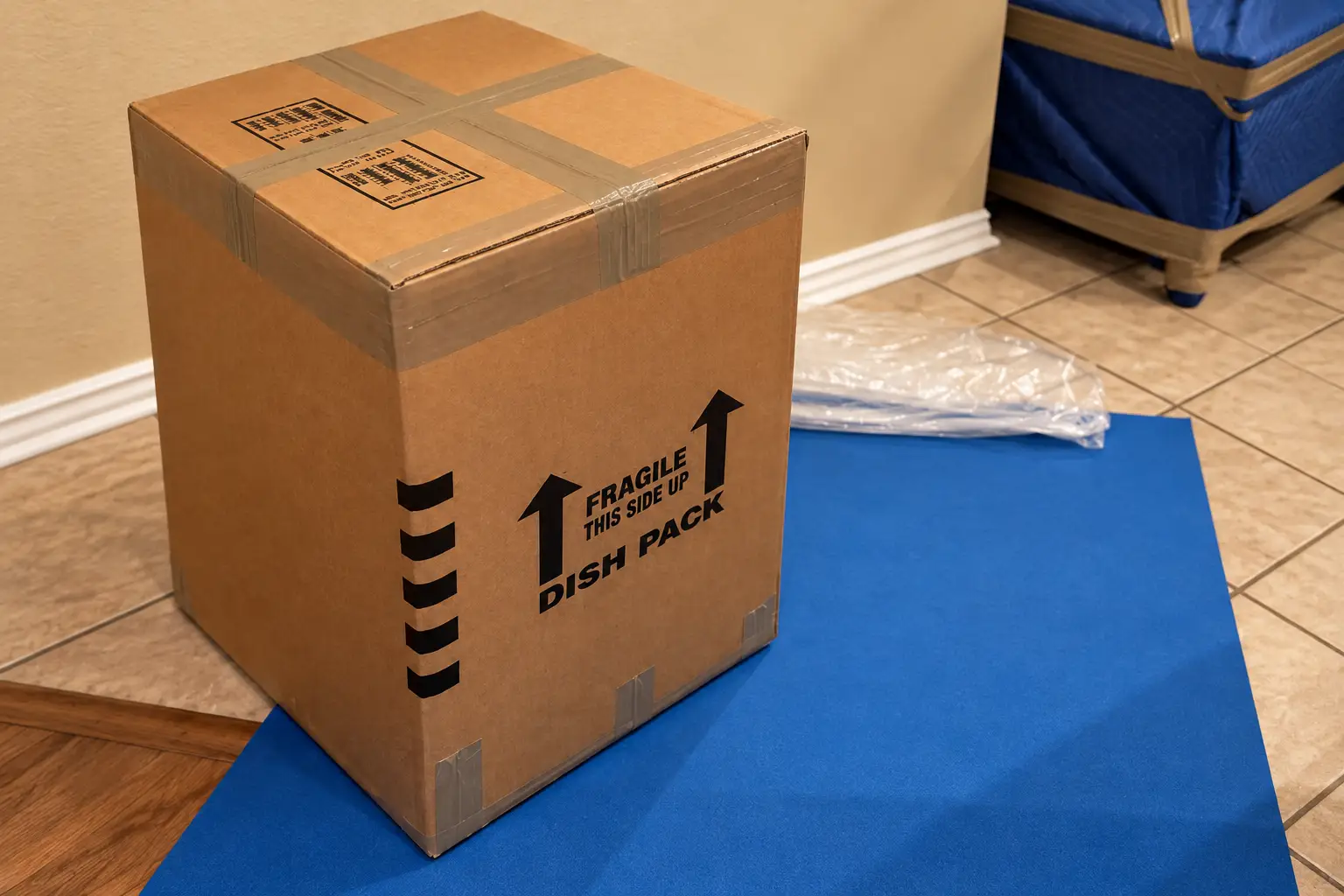
If you're packing fragile or high-value items like china, art, or electronics, budget extra time for proper wrapping rather than rushing it. Damage claims are far more common when fragile items get packed in the last frantic hour, and if something does turn up broken after the fact, knowing what to do if movers damage your belongings ahead of time keeps a bad moment from turning into a bigger headache.
As a rough guide, a one-bedroom apartment fills 20-30 boxes, a three-bedroom house fills 60-90, and a large four-bedroom home can exceed 120. Knowing this ahead of time helps you order enough supplies instead of making three trips to the store mid-project.
Start non-essential rooms three to four weeks before moving day, and save daily-use rooms like the kitchen and bathroom for the final week. Starting too early leads to living out of boxes for a month; starting too late leads to a chaotic final 48 hours.
A practical order: closets and storage areas first, then guest rooms and garages, then living areas, and finally the kitchen and bathrooms last. This keeps your home livable right up until moving day while still spreading the workload out.
If your move date is set and you're building a full schedule around it, a week-by-week moving checklist is worth working from so packing doesn't compete with the dozen other tasks a move requires.
Two hours a night for two to three weeks gets most three-bedroom homes packed without burning a weekend. If you only have weekends available, plan on two to three full weekend days rather than trying to compress everything into one.
Self-packing saves money but costs time and physical effort; professional packing costs more but can compress a multi-day job into a single afternoon. The right call depends on your timeline, your budget, and how much of your home is fragile or awkward to pack.
Full-service packing makes the most sense when your move date is close, when you have a demanding schedule, or when your home has a large volume of breakables. Partial packing, where movers handle the kitchen and fragile items while you pack everything else, is a middle option that trims a day or two off your timeline without the full cost.
If your move involves items that need extra care, like antiques, artwork, or electronics, our specialty moving services cover the packing and handling those pieces need so they're not the reason your timeline slips. And once boxes start piling up, loading them correctly matters just as much as packing them: our guide to how to pack a moving truck covers the loading order that keeps everything you just packed from shifting in transit.
Work backward from your move date and build in a buffer day before the truck arrives. Even a well-planned packing schedule tends to run about 10-15% longer than expected, so a buffer keeps a slow afternoon from turning into a crisis.
Once your packing schedule is set, lock in your move date and crew early, especially if you're moving during a popular window like a weekend or month-end. If you're ready to put a date on the calendar, you can get a moving quote to see what's available and get your crew booked before your preferred dates fill up.
A small apartment can realistically be packed in one day, but a full house usually can't be done well in a single day without hiring several extra people. Rushing a whole house into one day increases the odds of mispacked boxes and damaged items.
Plan for roughly 20-30 total hours of work, which usually spreads across three to four days for one or two packers. A larger crew or professional packing team can compress this into a single long day.
Room by room is easier for most households because it keeps similar items together and makes unpacking simpler. Packing by category (all books, all clothes) can be faster for people who are organized and want to declutter as they go.
More than five to six weeks out is usually too early for most households, since you'll end up needing packed items back before moving day. Three to four weeks before the move is the sweet spot for non-essential rooms.
Kitchens and garages consistently take the longest because of the sheer number of small, oddly shaped, or easily forgotten items. Home offices and kids' rooms are close behind due to cables, papers, and sentimental items that require decisions.
Moving in Celina or the DFW area? PKWY Moving & Storage handles local, residential, commercial, and long-distance moves. Get your free quote today.




.webp)
%20(1).png)
.webp)