
Written by:
Pkwy Moving & Storage Team
Published:
October 14, 2026
Moving with an artificial Christmas tree? Learn how to store it so branches don't bend, lights don't tangle, and it's ready to set up next season.
Storing an artificial tree so it survives a move comes down to three things: keeping branches from getting crushed under their own weight, keeping the stand and lights separate from the foliage so nothing tangles, and keeping the whole thing dry and pest-free wherever it sits between now and next season. Most artificial trees don't get ruined by rough handling on moving day, they get ruined by sitting bent in a flimsy box for ten months. Here's how to pack one so it comes out looking the way it went in.
The best way to store an artificial tree is upright and segmented in a hard-sided storage bag or box sized to its branches, not folded flat into a bag meant for something else. Breaking the tree down into its original sections, bagging each one separately, and keeping it off the floor prevents the two things that actually destroy artificial trees: permanent branch bends and moisture damage.
A lot of households default to whatever box the tree originally shipped in, then watch that box collapse after a move or two. Cardboard softens with humidity and repeated stacking, and once it buckles, the branches inside buckle with it. A rolling duffel-style tree bag or a rigid canvas storage box built for the purpose holds its shape far longer and makes the tree easy to carry onto a moving truck without anyone grabbing it by the branches.
Branches hold their shape best when they're fluffed out before storage, not compressed, and when nothing heavy ever sits on top of the stored tree. Pre-shaped branches on mid-range and higher-end artificial trees are built around a wire core, and that wire takes on whatever shape it's forced into for months at a time.
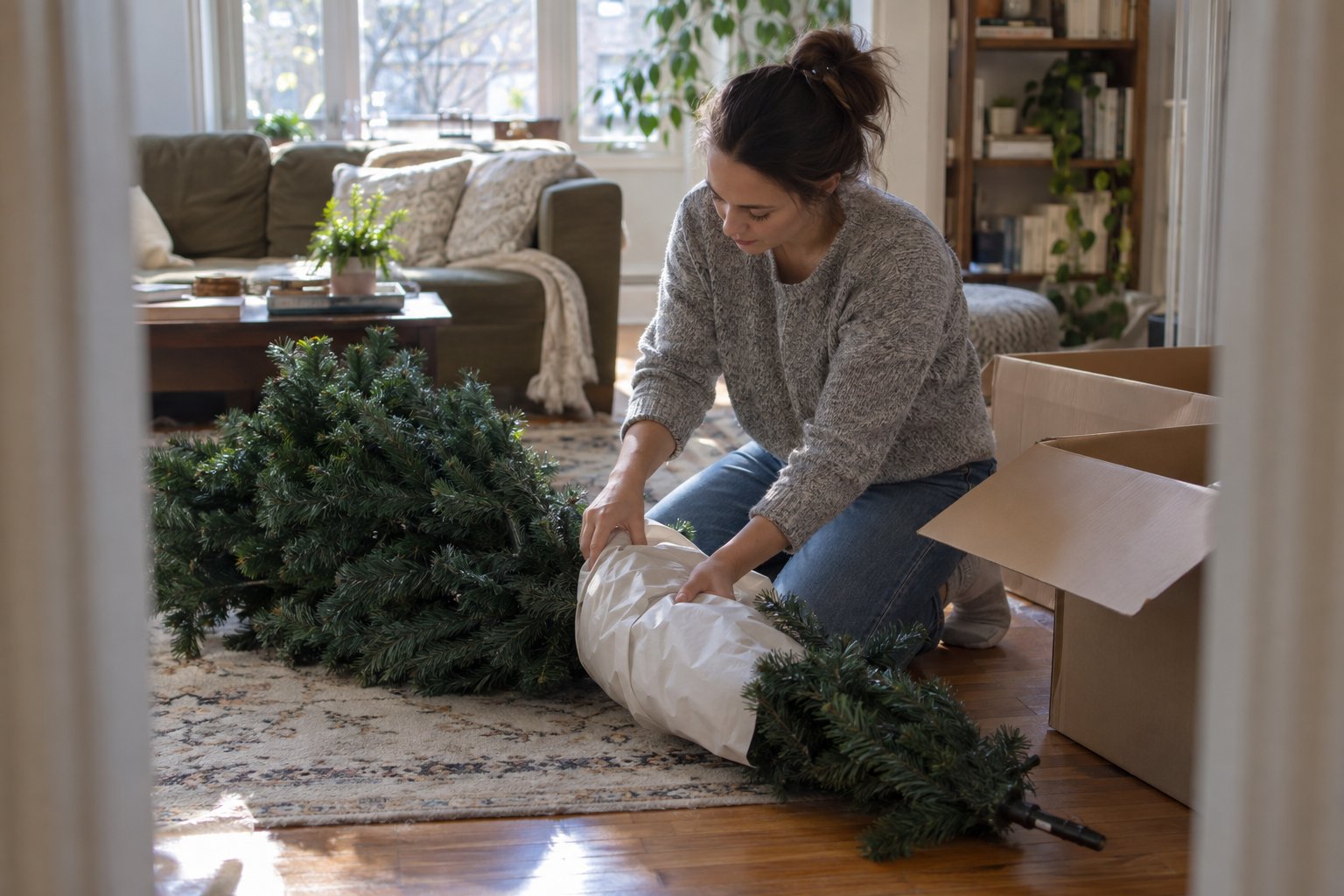
A few habits make a real difference here. Fluff each section back to its natural shape before bagging it, rather than cramming it in compressed. If the tree separates into three or four sections, store each one in its own sleeve so the weight of the top section never rests on the bottom one. And if you're stacking other boxes nearby, the tree section goes on top of the pile, never underneath it.
Pre-lit trees need the same branch care plus one more step: protecting the wiring. Wrap each light strand loosely around its branch group rather than letting it dangle and snag during handling, and avoid yanking sections apart by the wires if they've gotten tangled with the foliage. A cracked bulb housing or a nicked wire from rough handling is one of the more common reasons a pre-lit tree stops working the following year, and it almost always traces back to how it was packed, not how it was used.
An artificial tree stores best somewhere climate-stable, dry, and out of direct sun, which rules out most garages, uninsulated attics, and sheds in a region with Texas summers. Heat makes the plastic needles brittle and can soften glue points where branches attach to the central pole, while damp basements invite mildew on the storage bag itself.
A closet or spare room is a better call than a garage rafter system, even though rafters are the classic answer for tree storage. If your new place doesn't have an obvious spot for it right away, keeping the bagged tree somewhere dry and temperature-stable, even temporarily, matters more than finding its permanent home on day one.
When a tree is traveling as part of a full household move rather than sitting in seasonal storage, the priority shifts slightly: it needs to survive one trip on a truck, not months of sitting still. That means padding matters more than shape-retention tricks, since a single rough ride can do in one day what a year of shelf storage wouldn't.
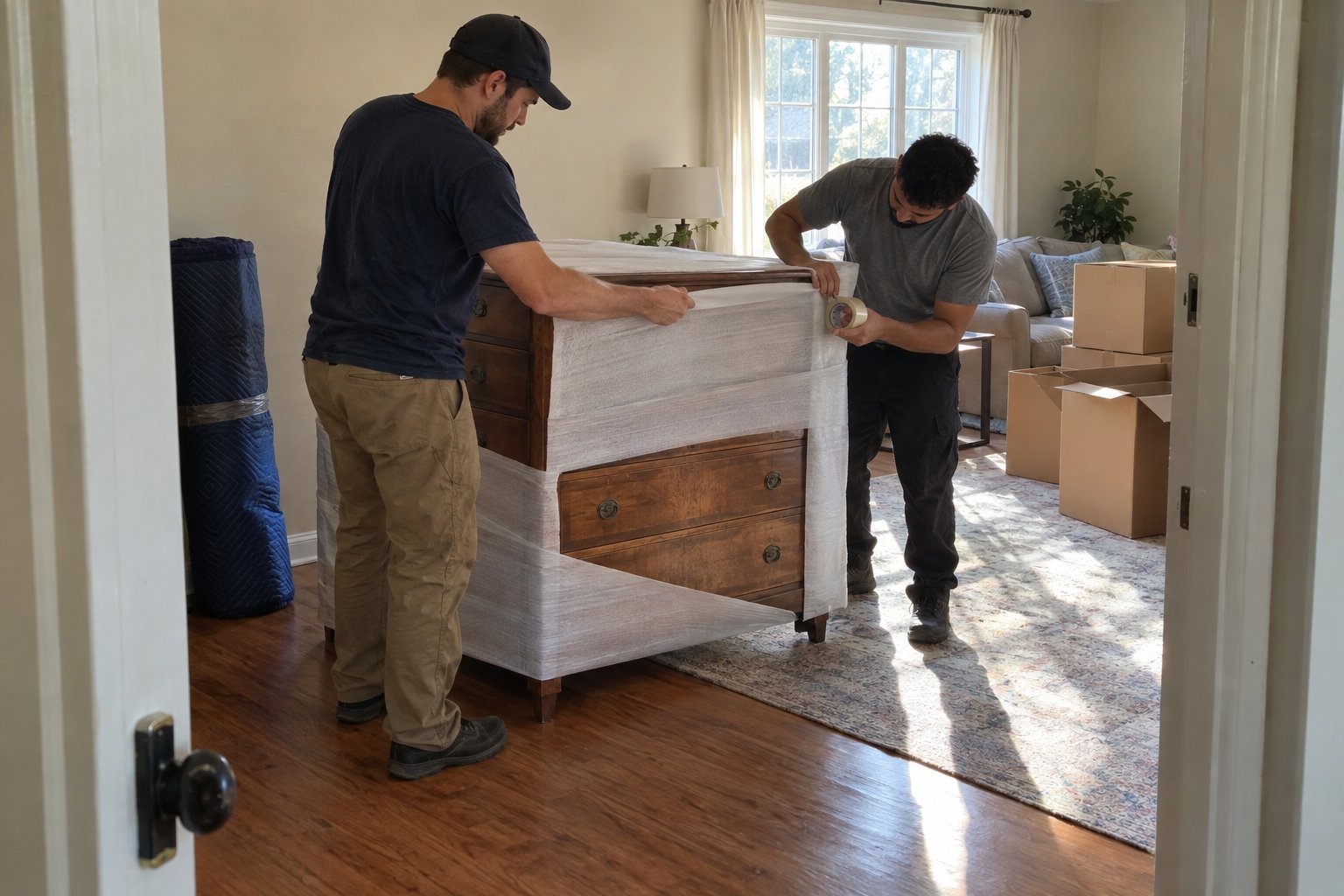
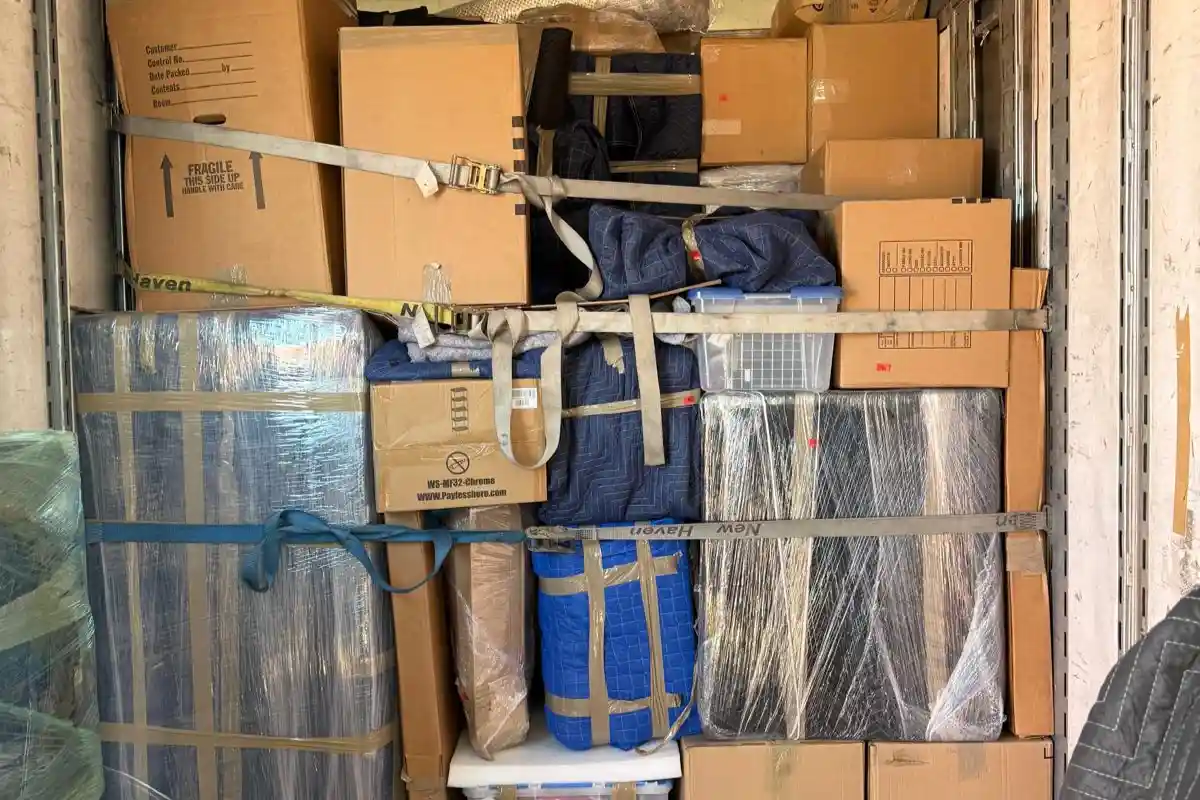
Lay tree sections flat along a wall of the truck rather than standing them upright and unsupported, and keep them away from anything that could puncture the storage bag, like tool edges or furniture corners. If the tree is pre-lit, tape the plug ends to the cord itself so they don't snag other items during loading. The same loading logic that protects furniture on a long haul applies here: sturdier items go in first and get braced so nothing shifts once the truck is moving.
If the move involves a lot of fragile or awkwardly shaped seasonal items beyond just the tree, like glass ornaments or wreaths, it's often worth having professional packing services handle that portion of the house. A crew that packs seasonal decor regularly knows how to nest fragile shapes without wasted space, which matters when a truck is already tight on room.
A tree with bent branches usually isn't worth replacing if the wire core hasn't snapped. Reshaping bent branches by hand, working from the trunk outward and bending gently in the opposite direction of the crease, restores most of the fullness over a season or two of use.
If the damage is more structural, like a cracked base or a snapped pole section, that's the point where storage method stops being the issue and the tree itself needs replacing before next season. Either way, switching to a proper upright storage bag going forward prevents the same damage from recurring.
If the tree is just one piece of a much larger household relocation, it helps to fold its packing into the same plan as everything else in the house, rather than treating it as an afterthought the week before the move. Build out a packing timeline for the whole house first, then slot seasonal items like the tree in during the early pass, since they're not needed day to day and are easy to box up ahead of time.
Whatever storage solution you land on for the tree at the new place, whether that's a closet shelf or a dedicated storage unit nearby, the goal is the same: dry, stable, and out of the way until the branches come back out next season.
Ready to plan the move itself? Get a moving quote and we'll help you figure out what needs packing now versus what can wait.
You can for a single short move, but long-term storage flat tends to flatten branches on one side permanently. Upright or segmented storage in a proper tree bag holds shape much better over multiple seasons.
They don't strictly need it, but extreme heat and humidity speed up brittleness in the needles and can loosen glued joints. A closet or a temperature-stable spare room beats a hot garage or damp basement.
Wrap each light strand loosely around its own branch section before bagging rather than letting strands dangle freely. Tape plug ends to the cord so they don't snag other branches during handling.
A rolling, rigid-sided tree storage bag sized to the tree's height and section count holds up far better over multiple years than the original cardboard shipping box, which softens and collapses with humidity and stacking.
If only the branches are bent and the wire core inside is intact, reshaping by hand over a season usually restores most of the fullness. Replace it only if the base, pole, or wire structure is actually cracked or snapped.
Moving in Celina or the DFW area? PKWY Moving & Storage handles local, residential, commercial, and long-distance moves. Get your free quote today.