
Written by:
Pkwy Moving & Storage Team
Published:
October 21, 2026
Hardwood scuffs, dented drywall, and scraped baseboards are the most common move-day damage. Here's how to protect floors and walls before the truck arrives.
Protecting floors and walls during a move comes down to covering the path before anything gets carried over it, not patching problems after a dresser already scuffed the hardwood or a box corner punched a hole in the drywall. The damage that shows up at the end of moving day almost always traces back to a turn, a doorway, or a staircase that nobody prepped in advance. Here's how to set up your home so the move happens without leaving marks behind.
Most of the damage comes from three repeatable spots: tight turns where furniture swings wide, doorframes that get clipped by a dresser corner, and stairs where a dropped box or a slipped grip scrapes the wall on the way down. It's rarely one dramatic accident. It's the same pinch point getting hit over and over by every person carrying something through it.
Hardwood and tile floors take damage from dragging more than from walking. Dollies with worn or hard wheels, furniture legs pushed instead of lifted, and grit tracked in from outside all leave marks that weren't there that morning. Walls take the hit mostly at corners, light switches, and stairwell turns, exactly where a large piece has the least clearance.
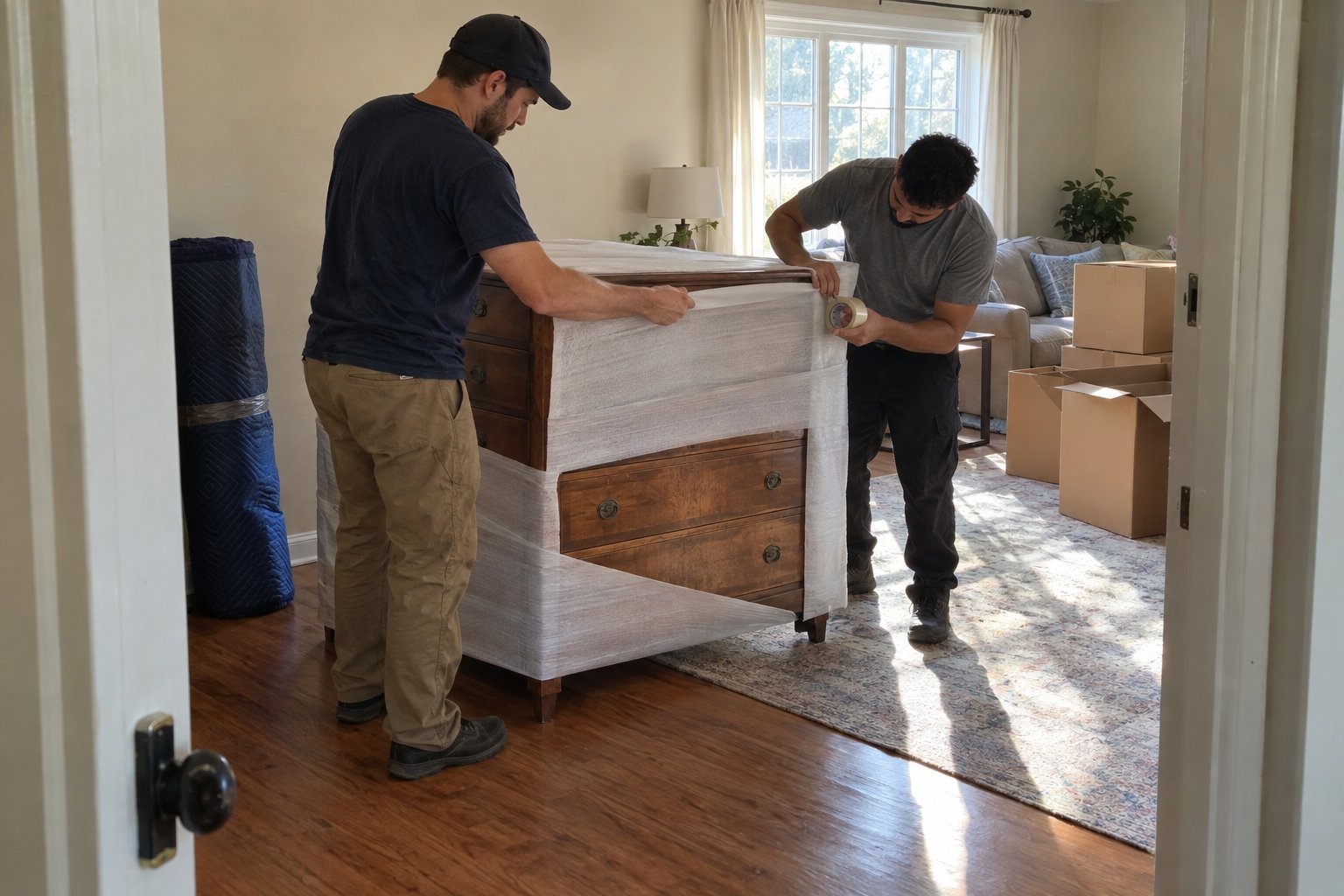
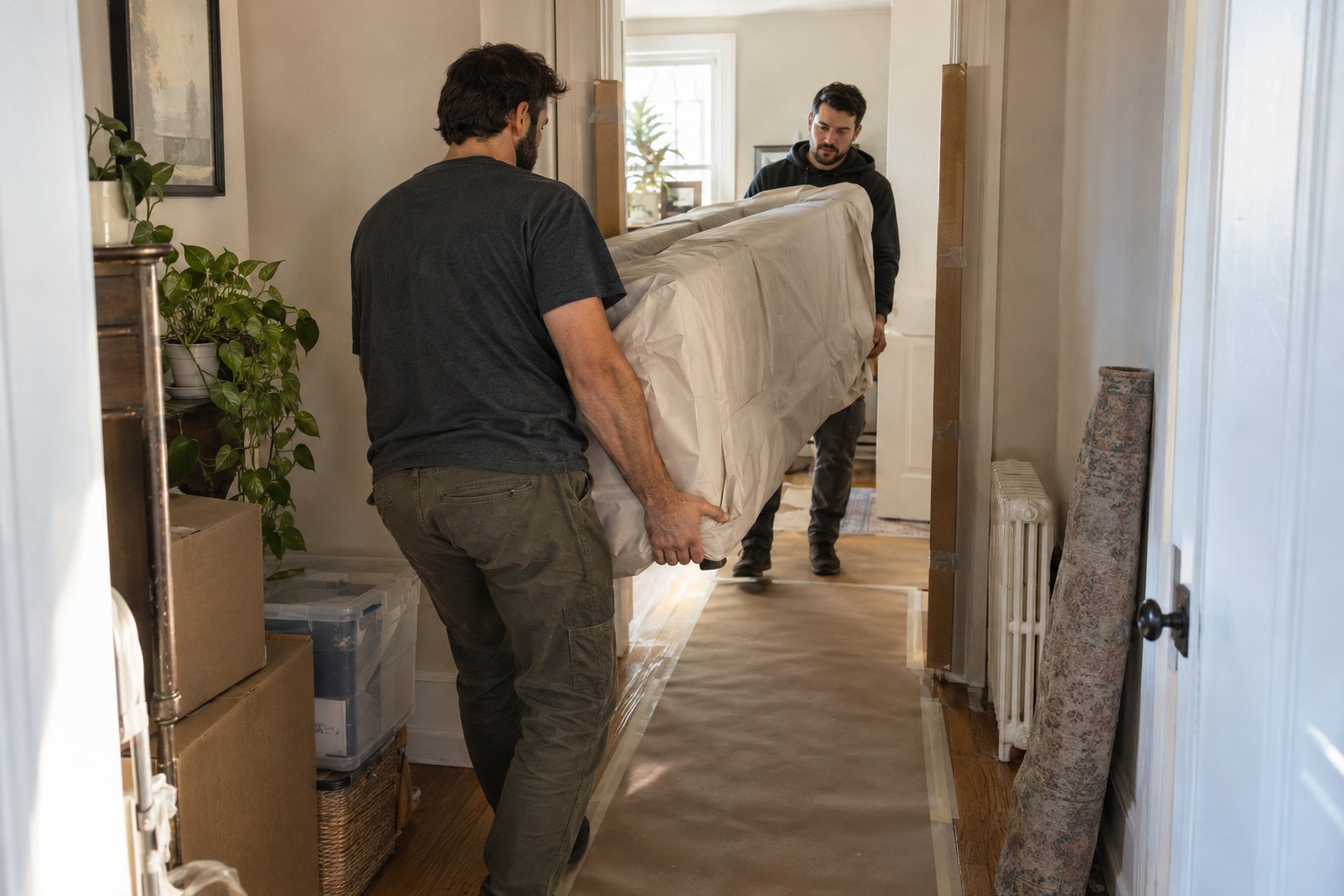
Lay down a protected path before you start carrying anything, not after the first piece goes through. Ram board, rosin paper, or thick moving blankets taped down along the main route from each room to the truck keep grit, dropped hardware, and dragged furniture legs from scratching the surface.
A few habits matter more than the material you use:
Stairs deserve their own runner. A single strip of protection down the center of a staircase takes most of the wear that would otherwise land directly on the wood or carpet.
The fix is distance, not luck: give corners, switch plates, and stairwell turns a buffer before a wide piece of furniture ever comes near them. Foam corner guards on exposed drywall corners, and a blanket or pad taped over a stairwell turn, absorb the contact that would otherwise dent or scrape the surface.
Doorframes are the other recurring problem. Measuring a piece of furniture against the doorway before attempting the move, and removing the door itself when the clearance is close, prevents the gouges that happen when someone tries to muscle a dresser through at an angle. If a hallway only has a few inches of clearance, it's worth carrying large pieces on their side rather than trying to walk them straight through.
If time is short, prioritize the spots that get hit repeatedly rather than trying to cover the whole house evenly. That means the main hallway, every doorway furniture has to pass through, and any staircase, since those three areas see the most traffic and the tightest clearances.
Entryways deserve attention too. The transition from outside to inside is where grit, moisture, and the first heavy pieces all concentrate at once, and it's often the last spot anyone thinks to protect because everyone's focused on what's happening inside the house.
In a rental, floor and wall damage isn't just cosmetic, it can come out of a security deposit. The same protection steps apply, but it's worth documenting the condition of floors, walls, and doorframes with photos before move-in day starts, so there's a clear before-and-after if a dispute comes up later.
Professional movers bring their own floor runners, corner guards, and furniture pads as a standard part of the job, and they already know which turns and doorways in a typical floor plan cause problems. That experience is the real value: a crew that has carried a thousand couches through a thousand hallways spots the tight spot before it becomes a scratch.
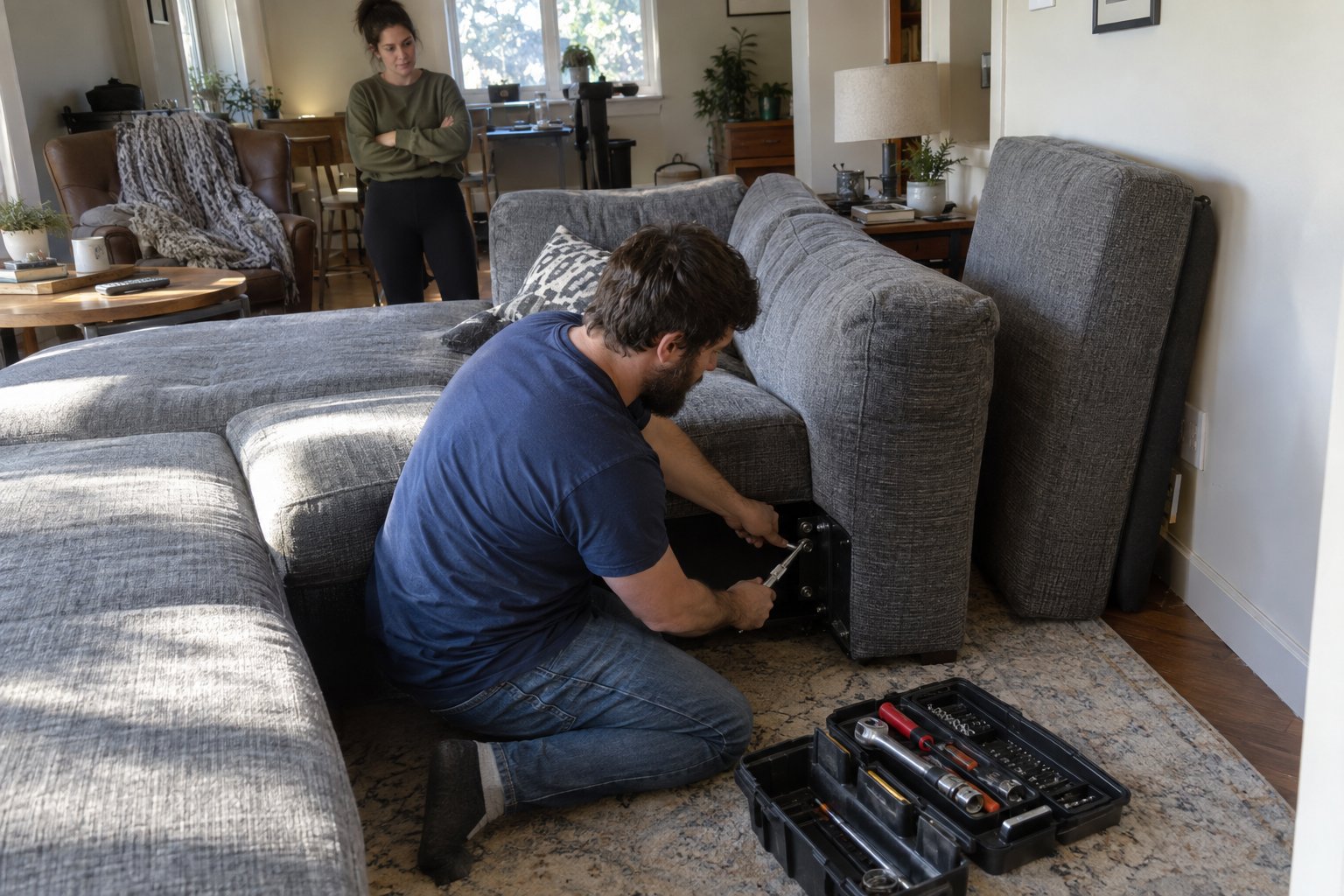
If you're packing and moving boxes and furniture yourself but want the heavy, awkward pieces handled by people who do this daily, residential moving services can cover just the loading, carrying, and furniture handling without taking over the whole move. For items that need to be taken apart to clear a doorway safely, having furniture disassembled and reassembled as part of the move avoids the angled, forced carries that cause most wall damage in the first place.
The prep is the same regardless of distance, but a local move usually means less time pressure to protect surfaces properly since the truck isn't on a tight multi-day schedule. If your move is within the Dallas–Fort Worth area, there's typically more flexibility to walk the route, tape down protection, and double-check clearances before loading starts, compared to a long-distance job where the crew is working against a tighter timeline on both ends.
Whatever the distance, the floor and wall prep itself takes less than an hour for most homes and saves a lot more than an hour of patching, touch-up paint, or refinishing afterward.
Protecting floors and walls is mostly about identifying the pinch points in your specific home, hallways, doorways, stairs, entryways, and covering them before the first box moves through. It's a short list of prep work compared to the alternative of dealing with gouged drywall or scratched hardwood after the truck pulls away.
If you'd rather have an experienced crew handle the carrying and protection themselves, get a moving quote and we'll walk you through what's included.
Ram board or rosin paper taped down along the main traffic path works well for hardwood and tile because it resists tearing and stays flat under foot and dolly traffic. Thick moving blankets are a decent substitute if you don't have rolled paper on hand, though they can bunch up and need more frequent repositioning.
Measure the couch's width and the hallway's narrowest point first, then carry it on its side or at an angle rather than flat, keeping a spotter at the back end to call out clearance as it moves. Removing any doors in the path first often creates just enough extra room to avoid contact.
Professional moving crews typically bring their own floor runners, furniture pads, and corner guards as standard equipment, so you generally don't need to supply your own. It's still worth confirming what's included when you book, especially for homes with finished hardwood or tile throughout.
Appliances should be moved on an appliance dolly rather than dragged, with a protected path laid down the full route from their original spot to the truck. Felt pads under the dolly's contact points and a slow, lifted carry over any transitions (like a threshold) prevent the deep gouges heavy appliances are prone to leaving.
That depends on your lease and who caused the damage, but documenting the condition of floors, walls, and doorframes with photos before moving day gives you a clear record either way. If damage happens, reporting it promptly and keeping those before photos makes any deposit dispute much easier to resolve.
Moving in Celina or the DFW area? PKWY Moving & Storage handles local, residential, commercial, and long-distance moves. Get your free quote today.