
Written by:
Pkwy Moving & Storage Team
Published:
November 11, 2026
A practical moving day checklist that walks through the morning, loading, transit, and unloading so nothing gets left behind or forgotten.
A moving day checklist works best when it's broken into blocks of time instead of one long list, because the morning, the loading window, and the final walkthrough each need a different kind of attention. Miss something in the first hour and it tends to snowball into the afternoon. Here's a timeline you can actually follow from the moment you wake up to the moment the last box comes off the truck.
Before anyone arrives, your job is to clear the path and confirm the plan, not to keep packing. Walk the route from the front door to the street and make sure it's clear of toys, rugs that slide, planters, or anything a crew member could trip over while carrying something heavy.
If your home has stairs or a tight driveway, mention it before the crew starts carrying anything so they can plan the route instead of discovering it mid-load.
A typical moving day moves in four blocks: arrival and walkthrough, loading, transit, and unloading. As a rough rule of thumb, allow about half a day for loading and unloading combined on an average home, with transit time on top depending on distance.
Keep your phone charged through all four blocks. Most of the back-and-forth questions ("where does this go," "is this one fragile") come up during loading and unloading.
While loading is underway, your main job is to stay available for questions and keep the essentials box with you, not to help carry furniture. Stand somewhere you can be found without being in the path the crew is using to move items out.
This is also the window to do a final sweep of rooms as they empty out. Once a room is clear, check the closet floor, behind doors, and any shelves that are easy to overlook. If you're bringing pets, keep them in a closed room or with a sitter during loading since open doors and a constant flow of people moving through can make it easy for an anxious animal to slip out.
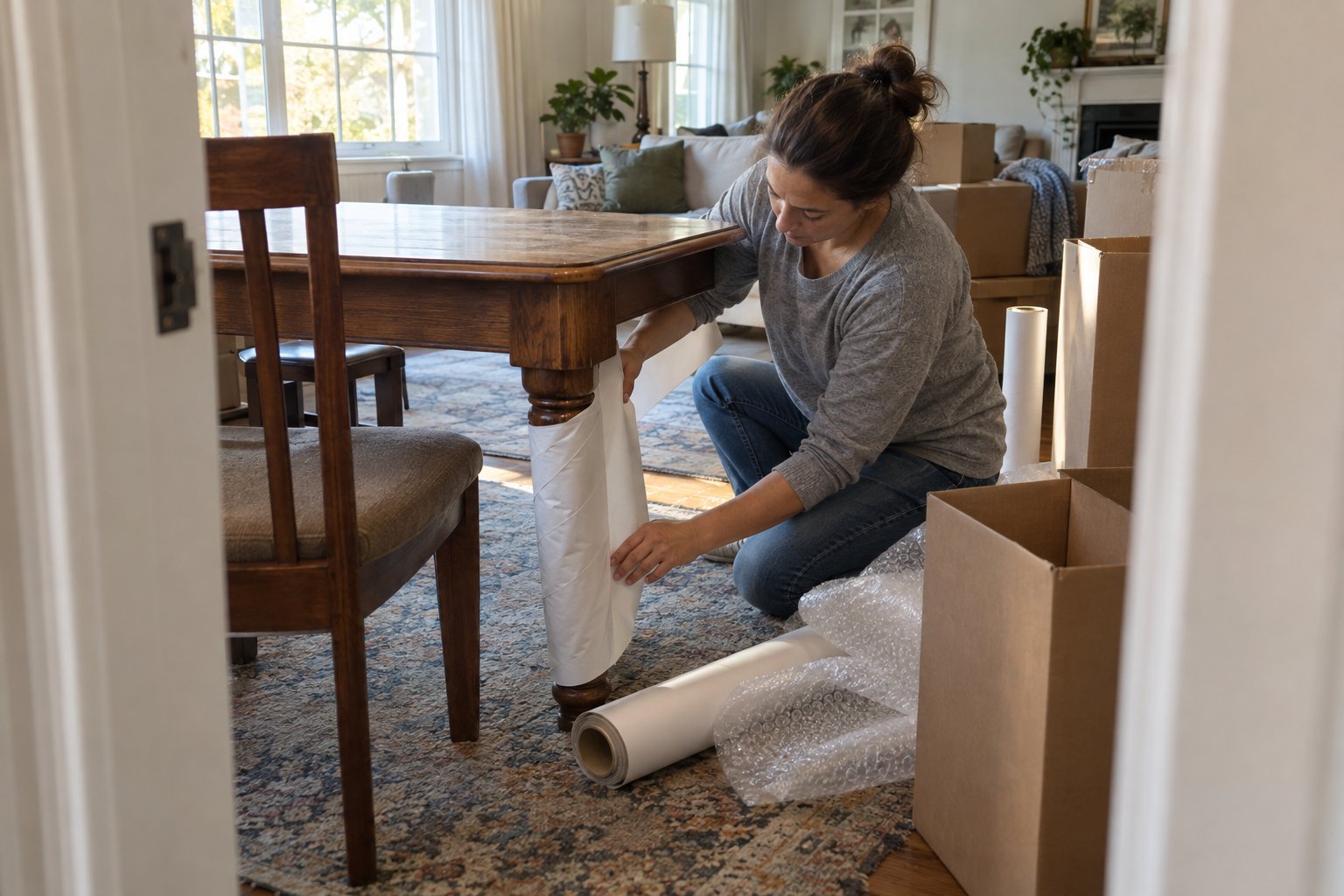
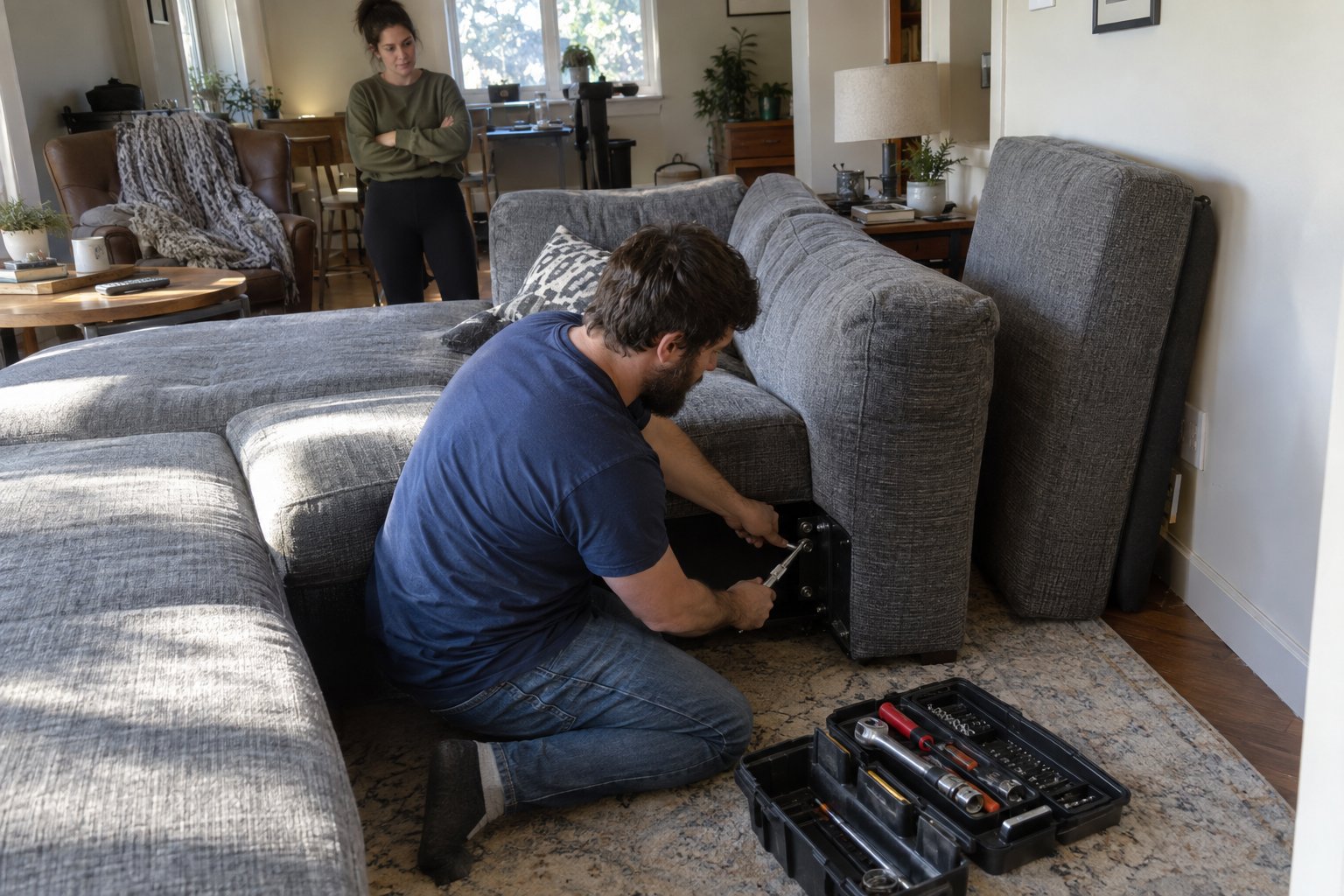
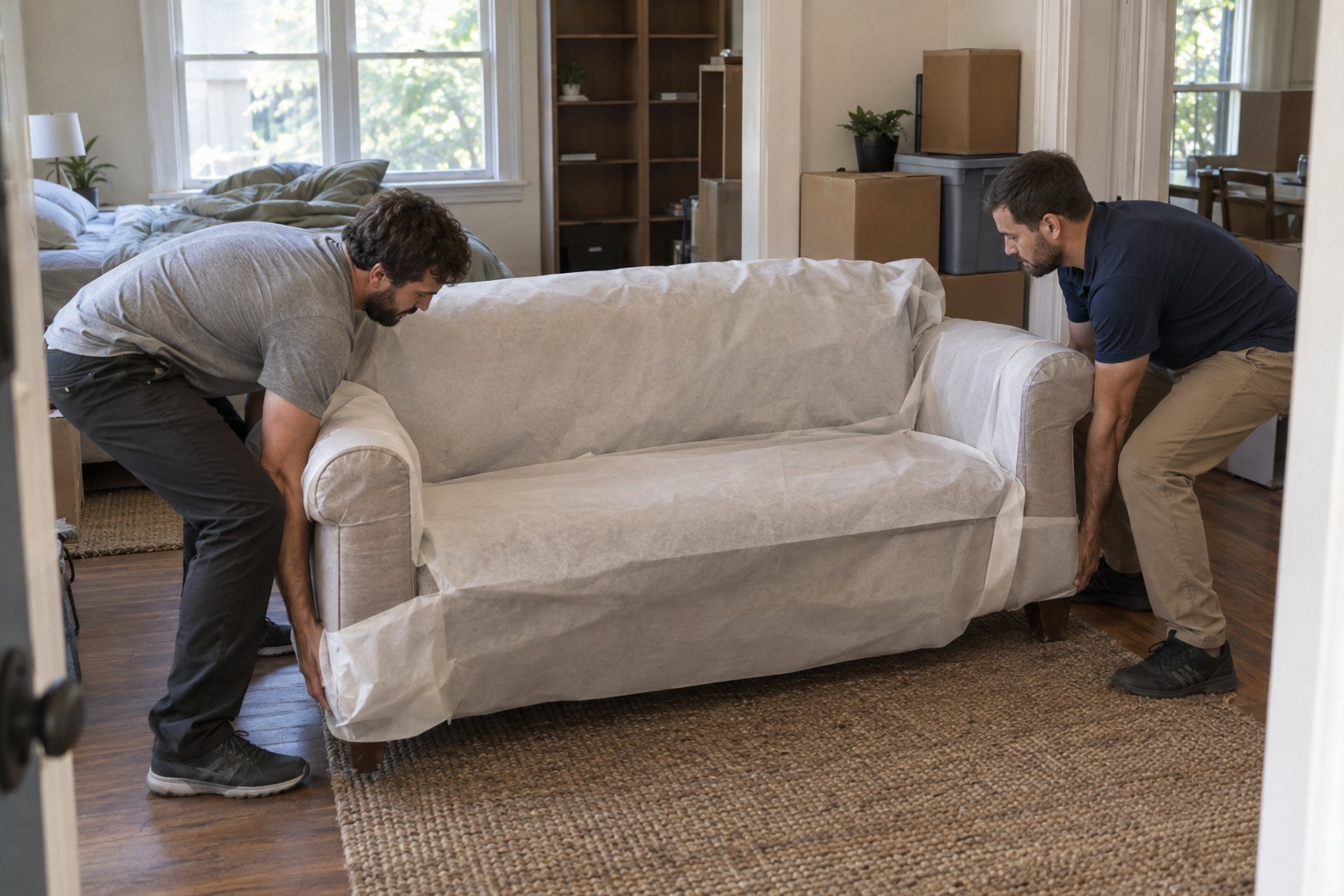
If anything needs to be carried apart and put back together, such as a bed frame or a table, let the crew know early so they can plan for reassembly at the new place rather than figuring it out at the last minute.
An essentials box holds everything you'll need in the first 24 hours without digging through sealed boxes. Pack it last and keep it with you in your own vehicle rather than loading it onto the truck.
If you're moving with kids, add a favorite toy or blanket to this box. A familiar item goes a long way on a day that otherwise looks nothing like their normal routine.
Before the truck pulls away, walk the entire home one more time, including the attic, garage, and any outdoor storage, to confirm nothing was left behind. This final walkthrough is the last real chance to catch something.
Once you've confirmed everything, it's worth filing your change of address with USPS if you haven't already, so mail starts routing to the new address right away instead of trailing behind you.
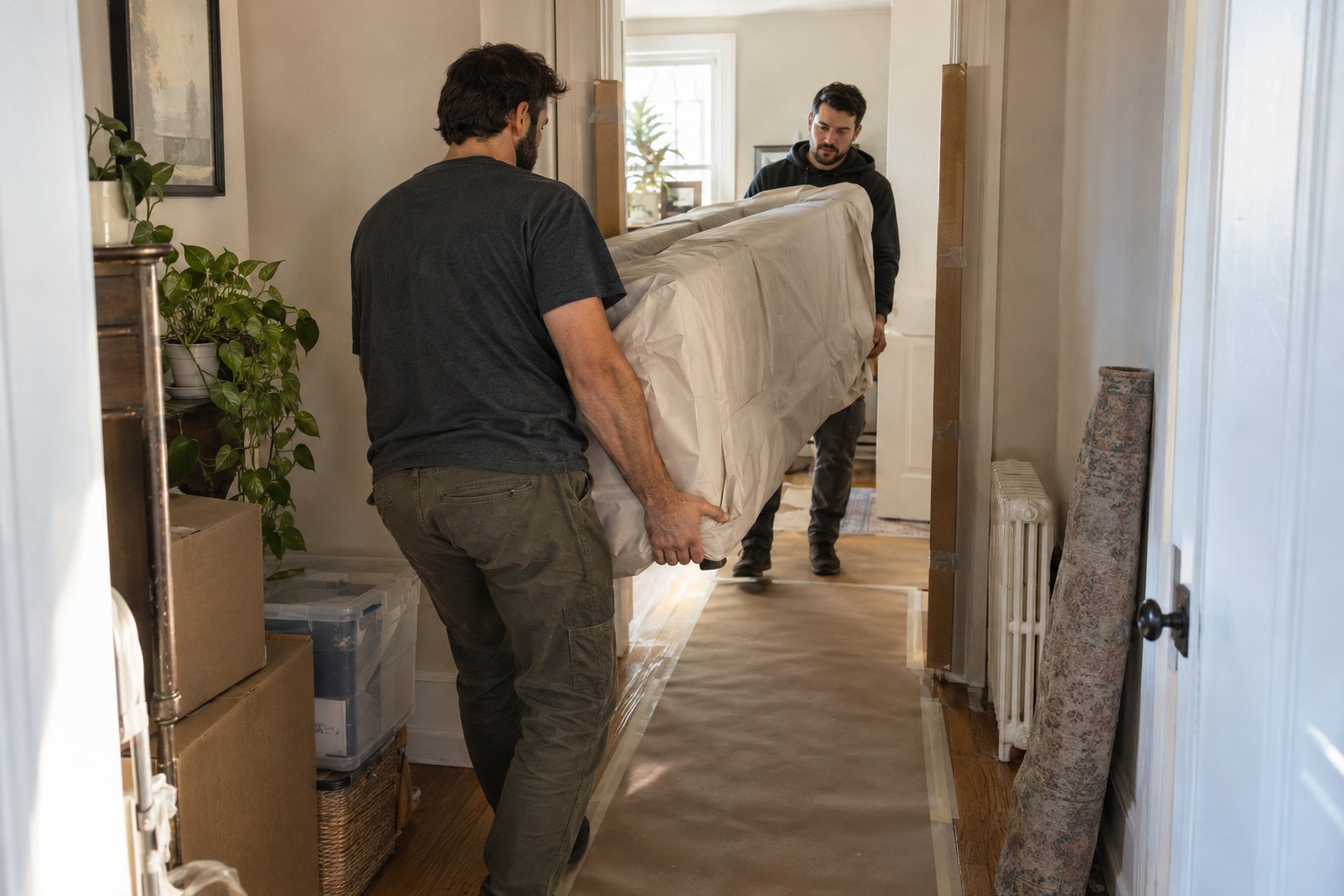
At the new place, your first task is another quick walkthrough before anything comes off the truck, so you can point out where large furniture should go and flag anything the crew needs to know about the layout. If your new home has a narrow hallway, a tight stairwell, or an HOA rule about where a truck can park, mention it as soon as you arrive rather than after unloading starts.
From there, unloading generally goes room by room, with beds, sofas, and other large pieces placed first since they're harder to move once the smaller boxes are stacked around them. Keep your essentials box with you rather than letting it get buried, and do a count of boxes against your inventory if you kept one, so you know right away if anything is missing.
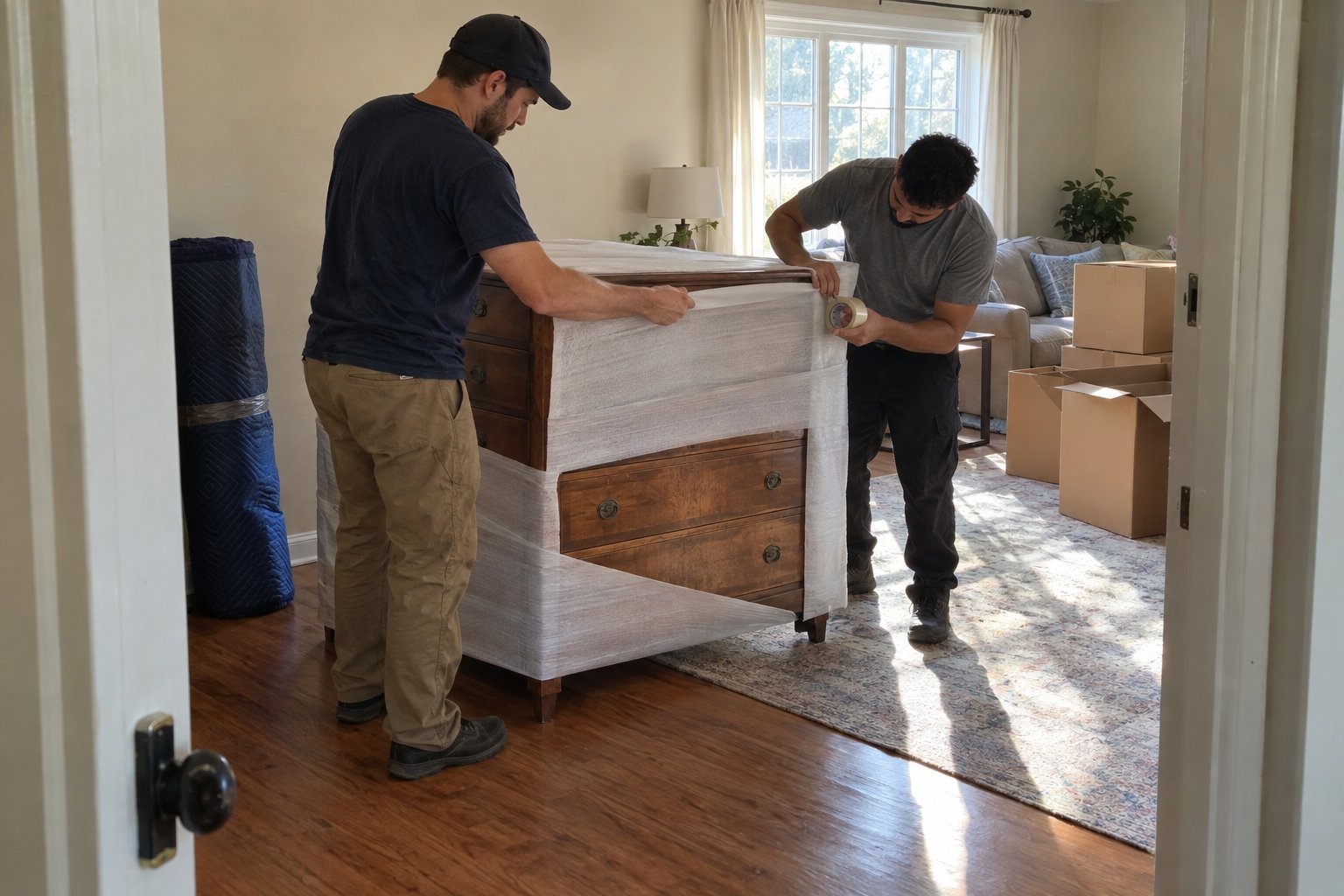
A moving day checklist is really just a way of making sure attention goes where it's needed at the right time: the walkthrough in the morning, availability during loading, a careful final sweep before the truck leaves, and another walkthrough once you arrive. If your move involves a lot of fragile or oversized furniture, professional packing services ahead of time can make the loading block go faster since less has to be wrapped on the spot. For a longer trip, it also helps to plan around long-distance moving timelines rather than assuming the same schedule as a move across town.
If you're moving within the Dallas-Fort Worth area, local traffic patterns can affect how much buffer to build into the transit block, so it's worth asking your crew for a realistic window rather than guessing. And if you haven't finished packing boxes yet, our guide to loading a truck so nothing shifts or breaks pairs well with this checklist once the truck is actually being filled.
Planning your move? Request a quote from Pkwy Moving & Storage.
Plan to be fully ready about an hour before the crew's arrival window, with the essentials box set aside and the path to the door cleared. That buffer gives you time to handle anything unexpected, like a forgotten drawer, without delaying the start of loading.
Let them know about stairs, tight doorways, any furniture that needs to be taken apart, and anything especially fragile or heavy. The more the crew knows before loading starts, the better they can plan the order items come out of the house.
Many families find it easier to have a sitter or a quiet room set aside for kids and pets during loading, since the constant flow of people and open doors can be stressful and increases the chance of someone slipping outside unnoticed.
Check your inventory list first, then check the truck itself, since boxes can shift during unloading and end up out of order. If something still seems to be missing, raise it with the crew lead right away rather than waiting until the next day.
Large furniture generally comes off first since it needs the most open floor space to maneuver, followed by boxes grouped by room. Having rooms labeled ahead of time makes this part of the day go much faster.
Moving in Celina or the DFW area? PKWY Moving & Storage handles local, residential, commercial, and long-distance moves. Get your free quote today.